
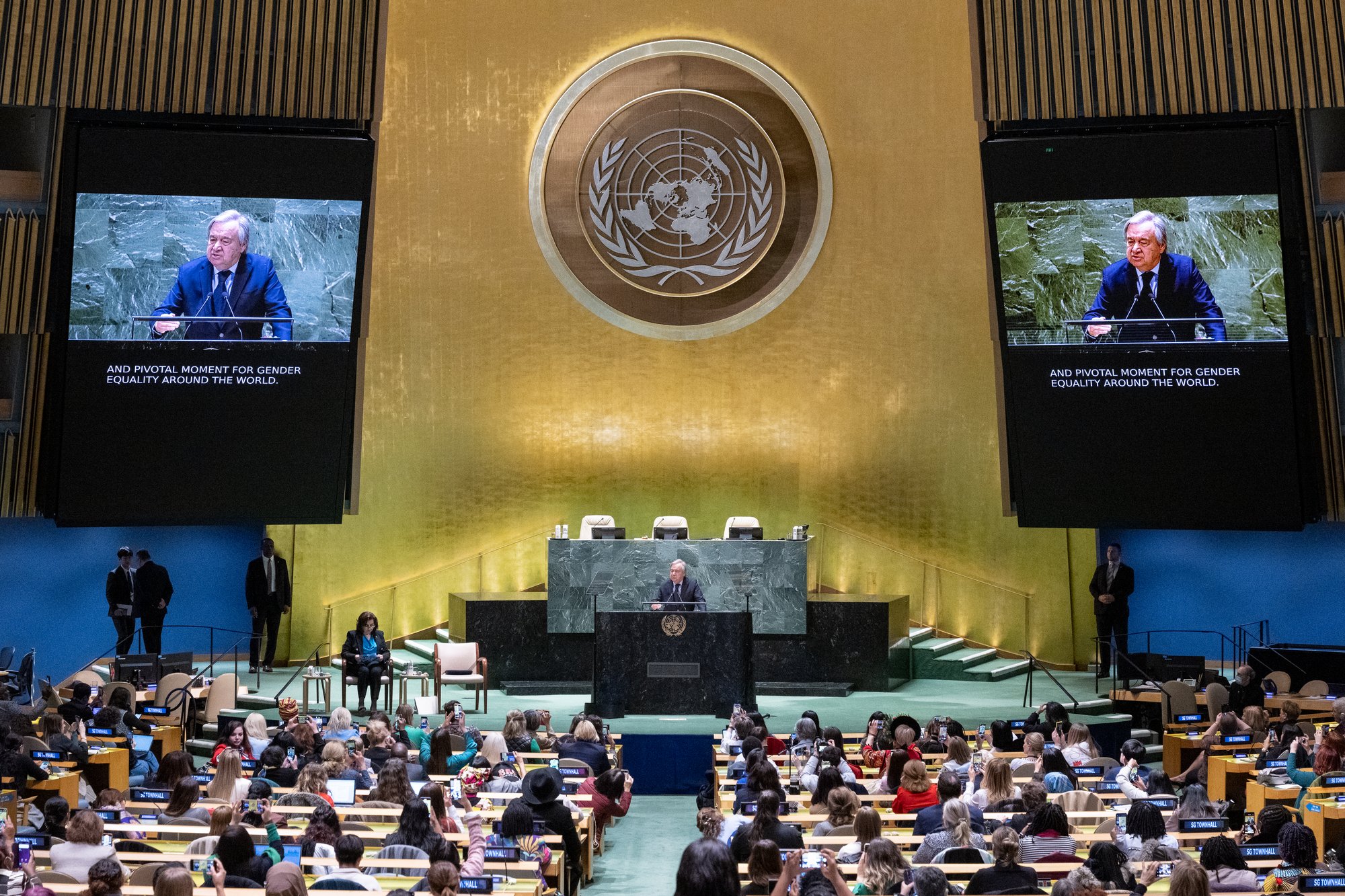
 As UN Secretary-General makes final climate address, global campaigners say the call to “Make Polluters Pay” has gone mainstream. In his powerful speech, he reaffirmed the importance of keeping the 1.5°C goal alive, and made a clear call for those most responsible for the climate crisis to be held accountable:
“Those who polluted the most – and profited the most – must do far more to repair the damage they caused. Polluters must pay. And to the leaders, cities, civil society and citizens working to hold them accountable: you are on the right side of history. Keep going.” said UN Secretary-General António Guterres.
The call for greater accountability from the fossil fuel industry driving the climate crisis came just 1 day after campaigners presented 2 million signatures demanding that governments “Make Polluters Pay” to the United Nations.
Throughout his tenure, Guterres has been among the forceful voices calling on the fossil-fuel industry to be made to answer for the damage their products cause, from urging windfall taxes on record oil and gas profits, to endorsing ‘solidarity levies’ to close the international climate finance gap owed to Global South countries, and calling for action to tackle those he called the “godfathers of climate chaos”. Campaigners say his intervention today shows how far that argument has travelled, and voice their hope that his successor will carry it forward at a moment when the case has never been more urgent.
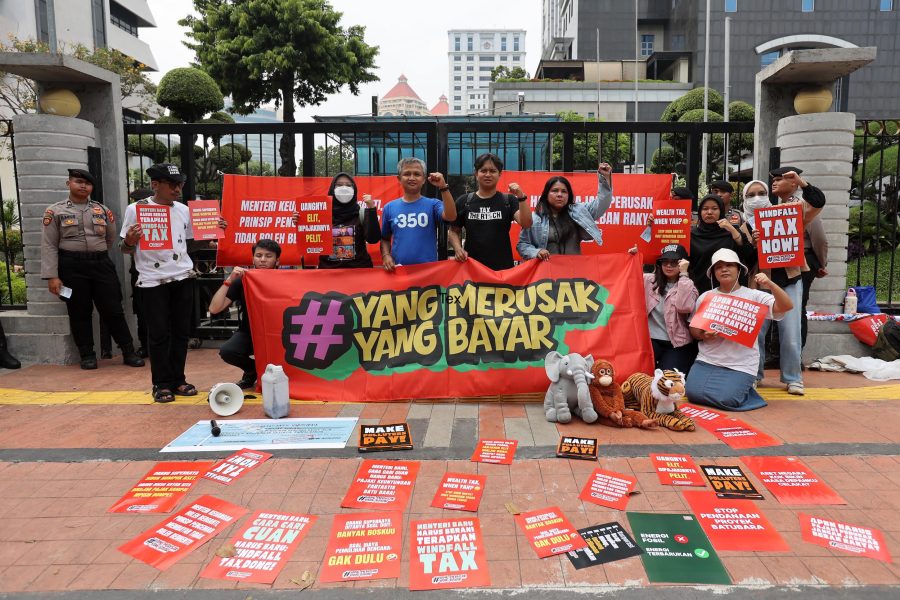
Earlier this week, members of the Make Polluters Pay International coalition, alongside frontline campaigners and communities, gathered in New York to highlight the growing public demand for fossil-fuel companies to pay for the costs of the climate damage their industry has caused. They presented at the UN petitions with a combined total of over 2 million signatures calling on governments to Make Polluters Pay.
This comes after a year marked by devastating wildfires, floods and deadly climate disasters, and continuing global energy insecurity linked to dependence on oil and gas. Campaigners say the message to governments is simple: we are breaching 1.5°C, a limit governments swore to hold, and the need for urgent action has never been clearer. As fossil-fuel companies keep raking in colossal profits, ordinary people are left paying the price through higher energy and food bills, and losses that can never be fully repaired: homes, harvest, lives.
The Make Polluters Pay campaign has mobilised millions of people around the world behind a demand for governments to introduce binding measures requiring fossil-fuel companies to contribute to the costs of climate damage and shifting the financial incentives that keep money flowing towards coal, oil & gas.
Campaigners are calling for measures including climate damages taxes, surtaxes on fossil-fuel profits and fines, with revenues directed towards recovery, adaptation, loss and damage and a just transition to renewable energy.
The campaign saw members of the Make Polluters Pay International coalition come together including 350.org, Greenpeace International, Fossil Free Media and Oxfam International, alongside frontline campaigners and communities affected by climate change.
Louise Hutchins, Co-Convenor of the Make Polluters Pay International Coalition, said, “When the UN Secretary-General calls for fossil-fuel companies to pay, you know this demand has become impossible to ignore. Millions of people around the world are calling for it and governments are starting to listen. After months of super-profits from the oil and gas industry, finance ministers are putting windfall taxes back on the agenda. This is a sign of how quickly the politics are changing. The movement is growing, the public is behind it, and governments need to catch up.”
Anne Jellema, Executive Director of 350.org, said, “For years, campaigners and communities on the frontlines have been saying the same thing: the companies that profited from fossil fuels must pay their fair share of the costs of the crisis they helped create. Today, that demand is moving into the mainstream. The Secretary-General’s call for polluters to pay reflects what millions of people are demanding around the world.
“We have watched homes burn, communities flood and families struggle with the costs of climate and energy crises, while fossil-fuel companies continue to make extraordinary profits. We pay. They profit. It’s time to change that. The voices of more than 2 million people are now being brought to the UN. Governments have the power to make polluters pay , and they must use it.”
Mads Christensen, Executive Director of Greenpeace International, said, “Guterres has spent years warning leaders where fossil-fuel dependence leads, and this year proved him right. From deadly heat to devastating fires and floods, the very dependence driving these disasters is shaking entire economies and leaving families exposed to volatile energy and food prices, while the companies behind it keep raking in the profits. The worse the crisis grows, the more they make: the very instability that empties people’s wallets fills theirs.
“That is the system permanent surtaxes on fossil-fuel profits start to break. New rules forcing governments to align their taxes and spending with global climate goals would raise hundreds of billions of dollars to support the countries and communities least responsible, while incentivising money out of fossil fuels and into secure, renewable energy that actually protects people. As long as destruction stays profitable, the transition to a safer, fairer future will keep being held back. Guterres has named the solution, governments must now act on it.”
Amitabh Behar, Executive Director of Oxfam International, said, “The people who have contributed least to the climate crisis are paying the highest price. They are losing homes, livelihoods and access to food and facing an increasingly uncertain future, while fossil-fuel corporations and their billionaire backers continue to profit. The call to Make Rich Polluters Pay is about justice. It is about ensuring that those who have benefited most from the fossil-fuel economy pay for the damage it has caused.
“Today the Secretary-General joined millions of people around the world in demanding that ‘polluters must pay’. It’s time for governments to listen and ensure that new sources of finance reach the communities on the frontlines of this crisis.”
Campaigners say the Secretary-General’s intervention marks an important moment in the growing push to hold fossil-fuel companies financially accountable for climate damage. The call comes as governments gather in New York to discuss global security, economic stability and resilience. Campaigners argue that these conversations cannot be separated from the climate and fossil-fuel crises.
Continued dependence on oil and gas leaves economies exposed to volatile global markets while accelerating climate disruption. They say the real route to energy security is to rapidly reduce fossil-fuel dependence, accelerate clean electrification and ensure that fossil-fuel companies contribute to the costs of the transition, adaptation and loss and damage.
The campaigners are calling on governments to:
- Make fossil-fuel companies pay through climate-damages taxes, permanent surtaxes on fossil fuel profits and meaningful fines.
- Direct the revenues to communities, including funding adaptation, recovery and loss and damage.
- Accelerate the transition away from fossil fuels towards clean, affordable and secure energy.
- Ensure polluters are held accountable through progressive fiscal policy, rather than allowing the costs of climate damage to continue falling on ordinary people.
ENDS





Leave A Comment