
From Outrage to Accountability: The Growing Push to Make Big Oil Pay
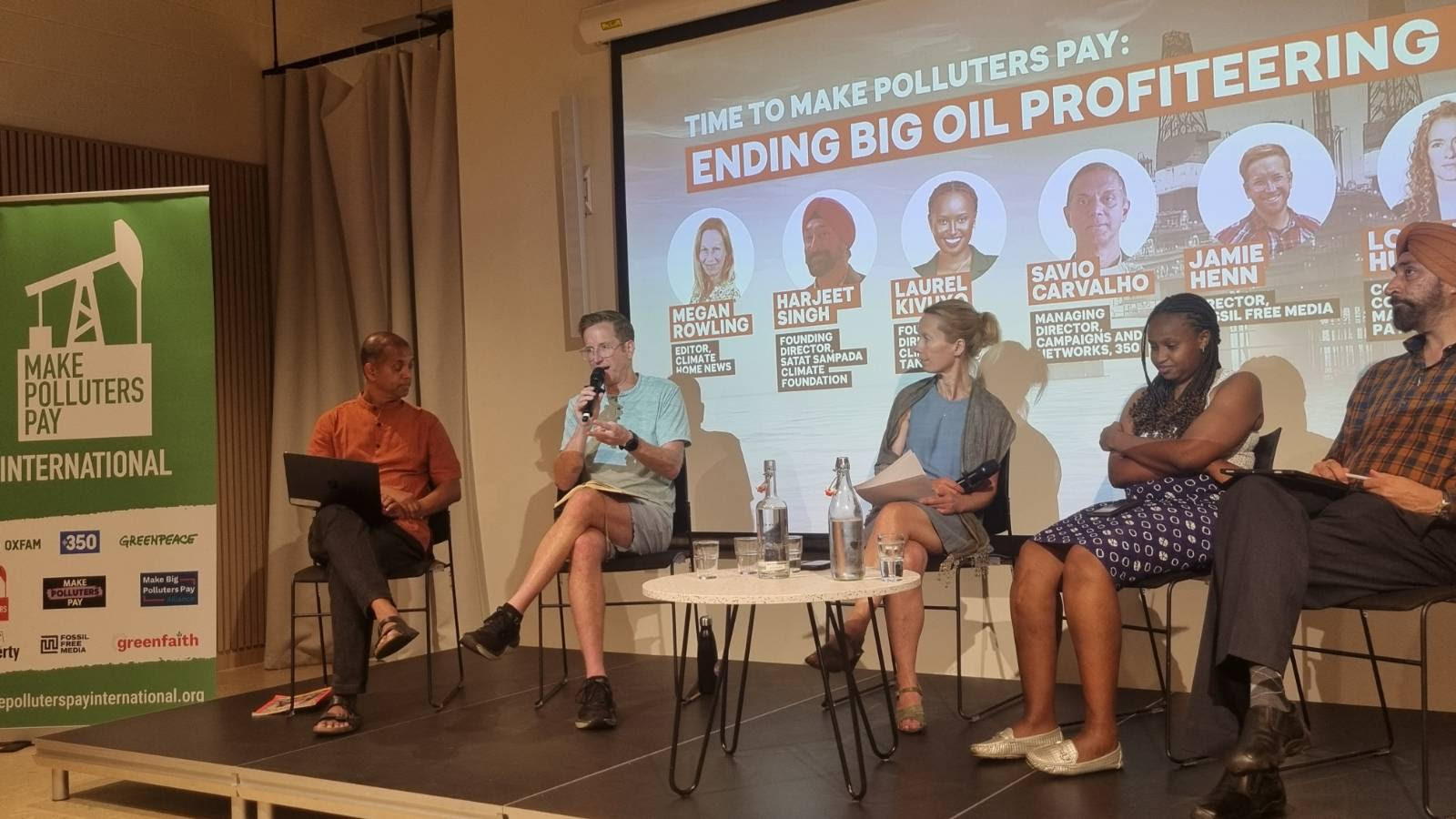
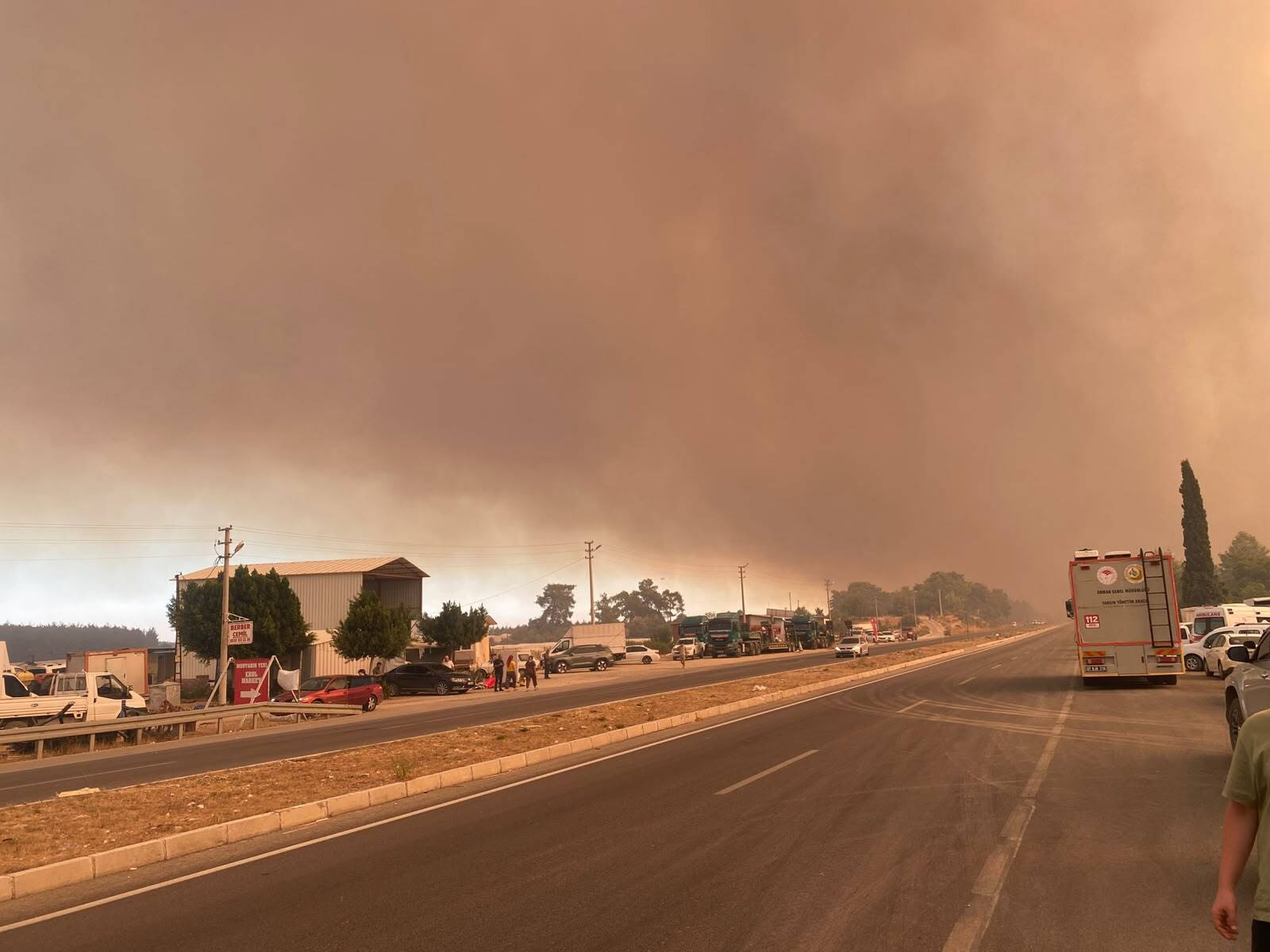
As London Climate Action Week unfolded against the backdrop of one of the UK’s most extreme heatwaves, journalists, frontline voices and campaigners gathered for a landmark Make Polluters Pay event highlighting the growing political, legal and public momentum to hold fossil fuel companies accountable for climate damage.
Hosted by 350.org, Stamp out Poverty, and chaired by Megan Rowling of Climate Home News, the Make Polluters Pay event brought together speakers from across movements and geographies to examine how narratives are shifting, and how accountability for Big Oil is moving from the margins to the mainstream.
As climate disasters intensify and energy prices remain volatile, public anger at fossil fuel profiteering is rising. The discussion highlighted how windfall taxes, closing tax loopholes, and a wave of climate litigation are beginning to challenge the power of oil, gas and coal companies with billions already at stake. 350’s recent Out of Pocket report puts the scale of the imbalance in stark terms: some $12 trillion a year flows to the fossil fuel industry in subsidies, tax breaks and unpaid climate damages, nearly 100 times the world’s total climate finance.
Megan Rowling, Climate Home News, said, “What I’ve seen throughout my career is that ideas often emerge first from civil society. Journalists report on them, campaigners advocate for them, and then one- or two-decades later governments begin making policy around those issues. Civil society is often a precursor to the conversations governments are having at UN climate talks. I firmly believe that Make Polluters Pay is no exception.
Harjeet Singh, Fossil Fuel Non-Proliferation Treaty Initiative, said, “The conversation has shifted. We can clearly see how an economy dependent on fossil fuels is wrecking the world. At the same time, fossil fuel companies continue to make staggering profits while claiming there is no money available to address climate impacts. This isn’t only about profits; it’s also about the subsidies that continue to flow towards them. We need to call out the perpetrators. These polluters are responsible, and they need to pay.”
Laurel Kivuyo, Climate Hub Tanzania, said, “When I think about communities already paying the price of climate change, I don’t think first about the reports or the big numbers. I think about the young women I work with every day. These communities have contributed very little to the climate crisis, yet they bear the brunt of its impacts. This is about more than climate injustice. We are talking about gender inequality, systemic inequality and people’s ability to survive.”
“If funding were available, it would make an enormous difference. Communities already have solutions. Yet we live in a technocratic world where experts arrive with models and plans. We need to learn from the local knowledge and community-led solutions that are already working”
Jamie Henn, US Make Polluters Pay Coalition, said, “People are living through the climate crisis every day. When someone has lost their home or seen their insurance costs soar because of climate-fueled disasters, they don’t need a science lecture. They need justice.”We need narratives that open up political space to take on the fossil fuel industry. We are convinced that Make Polluters Pay is the most effective narrative we have for doing that.”
Savio Carvalho, 350.org, said, “From climate superfund laws in the United States to windfall taxes in Europe and litigation from France to the Philippines, what looks like scattered, separate wins is in fact one movement taking shape.”
“Ordinary people are paying three times over for fossil fuels, through their taxes, their bills and the damage to their lives, while the industry profits. Making polluters pay is how we both hold them to account and unlock the finance needed for affordable, clean energy and a just transition.”
Speakers emphasized that making polluters pay is not only about accountability, but about unlocking the scale of finance needed to support vulnerable communities, invest in clean energy, and build resilience in the face of worsening climate extremes. As London’s historic center of fossil fuel finance hosts global climate discussions, the call for accountability is becoming harder to ignore.
ENDS
About Make Polluters Pay International
Make Polluters Pay International is a growing global coalition holding oil, gas, and coal giants accountable for climate breakdown. Grounded in the polluter pays principle, the coalition unites around a clear mission: unlocking the funding needed to accelerate climate action and counter the powerful anti-climate forces shaping politics and public opinion worldwide.
About 350.org
350.org is a global climate campaign organisation working to end the fossil fuel era and build a world of community-led renewable energy for all. Active in more than 60 countries, 350.org mobilises millions of people around the world to take on the most powerful interests driving climate breakdown.
About Stamp out Poverty
Stamp out Poverty is a campaigning organisation dedicated to ending the fossil fuel era, strengthening resilience by accelerating the transition to renewables and providing support to communities on the frontline of the climate emergency.




Leave A Comment