
Beyond Accessibility: Nexus and Rallying Points
Farhan Helmy
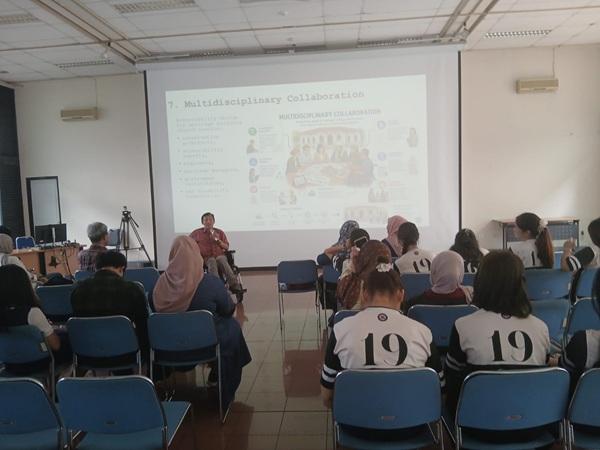
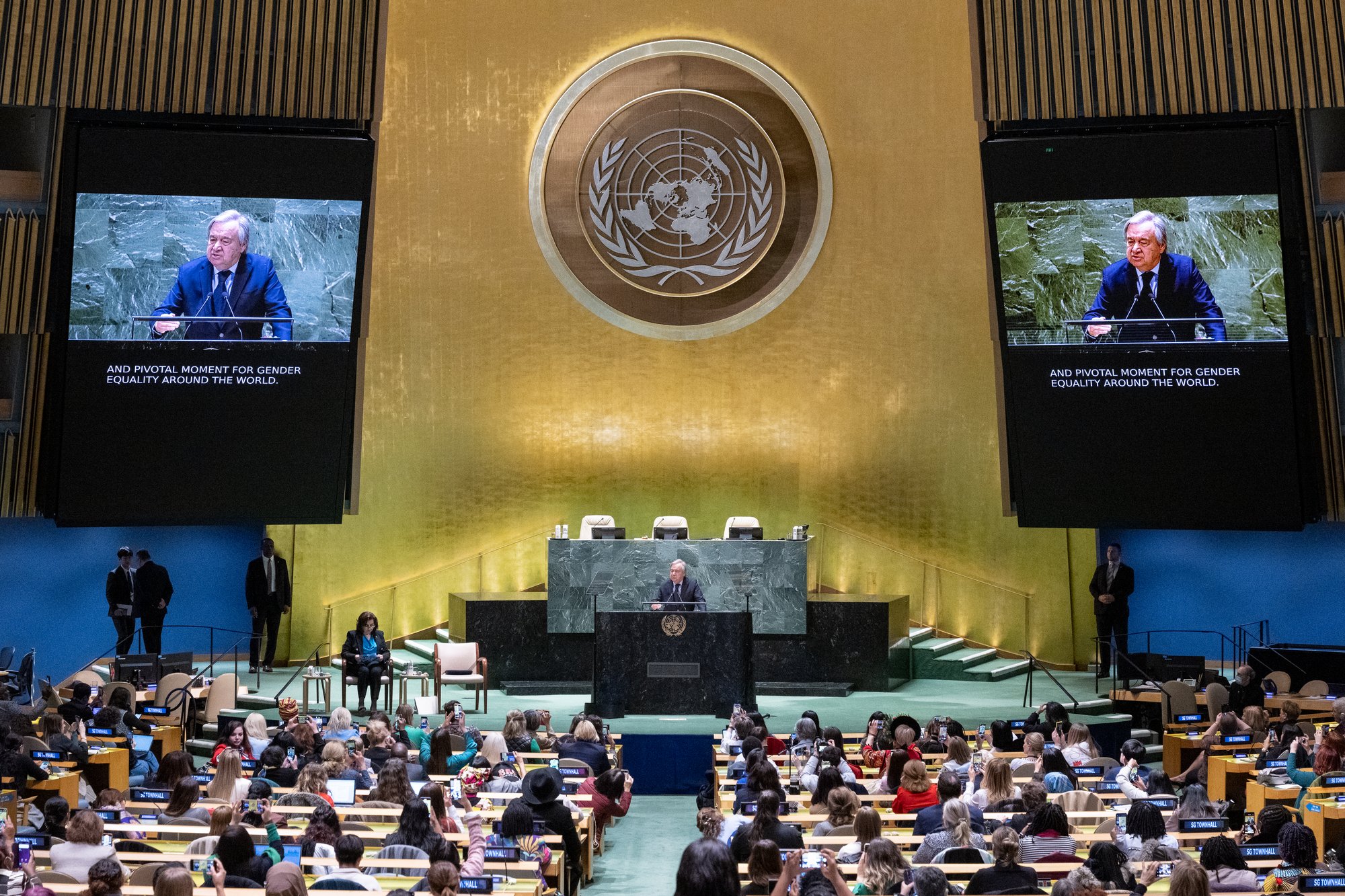
On 12 May 2026, I had the opportunity to deliver a guest lecture at Institut Teknologi Bandung as part of the collaborative program between ITB and Universiti Sains Malaysia on Global Project-Based Learning on a Review of Accessibility Facilities for Persons with Disabilities at Tourism Sites in Bandung, Indonesia. The session was officially framed around Inclusive Tourism Infrastructure and Accessibility Standards, but the discussion quickly evolved into something much broader: a reflection on inclusion, urban futures, sustainability, governance, and the growing need to reconnect fragmented conversations across society.
The presentation itself was titled Beyond Accessibility: Designing Inclusive Tourism and Urban Futures. I deliberately chose the phrase “beyond accessibility” because accessibility should never be understood merely as a technical checklist of ramps, tactile paving, accessible toilets, or disability-friendly pathways. Those elements remain essential, but accessibility is ultimately about how society defines dignity, participation, and belonging. It reflects who is anticipated within public spaces and who continues to remain invisible within systems of development.
Too often, discussions on tourism infrastructure and urban planning remain trapped within narrow sectoral thinking. Accessibility is treated as a specialized issue for persons with disabilities, climate is discussed separately as an environmental issue, while governance, economic inequality, ageing populations, and technological transformation are addressed through different institutional silos. Yet in reality, these crises and transitions are deeply interconnected.
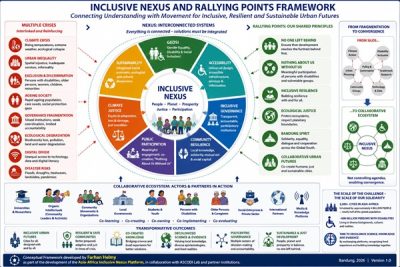 This is where the idea of the Nexus becomes important. The Nexus perspective recognizes that exclusion, climate vulnerability, ecological degradation, poverty, urban inequality, weak public services, and sustainability challenges do not operate independently. They shape and reinforce one another. A city that is inaccessible for persons with disabilities and older persons is often also poorly prepared for disasters. A tourism ecosystem that ignores inclusion frequently reflects deeper inequalities in governance and public participation. Climate adaptation strategies that fail to include vulnerable groups risk reproducing exclusion under the language of resilience or green transition.
In the presentation, I emphasized that the work of DILANS Indonesia has increasingly evolved around this interconnected understanding, placing Gender Equality, Disability, and Social Inclusion (GEDSI), climate crisis response, and sustainability within one integrated framework. Inclusion cannot be detached from ecological realities, and sustainability cannot be meaningful if it ignores justice and participation.
The challenge today is that we are living in a period of fragmentation. Climate actors, disability advocates, urban planners, technology communities, academics, social movements, and policy institutions often operate separately despite facing the same systemic crisis. Even within sustainability discourse itself, fragmentation continues to deepen. Climate finance discussions may proceed without accessibility considerations. Smart city initiatives often prioritize efficiency over inclusion. ESG frameworks sometimes speak about social justice while vulnerable communities remain excluded from data, knowledge, and decision-making processes.
The presentation highlighted that globally, approximately 1.5 billion persons with disabilities, older persons, and vulnerable groups remain systematically excluded from social and climate agendas, including tens of millions in Indonesia itself. This exclusion is not simply a policy failure. It is also a failure of imagination and collective political priorities.
Yet fragmentation cannot be addressed only through analytical frameworks or policy integration. It also requires shared narratives capable of bringing people together across sectors and interests. This is where the importance of Rallying Points emerges.
If Nexus helps us understand the interconnected nature of the crisis, Rallying Points help societies organize collective action around shared values and common futures. Principles such as “No One Left Behind” and “Nothing About Us Without Us,” which were central in the lecture framework, function not only as ethical commitments but also as political and social rallying points. They create convergence between groups that may otherwise remain disconnected.
Accessibility itself can become a rallying point because it intersects with many dimensions of life. It concerns architecture, mobility, public health, digital systems, transportation, tourism, education, disaster response, and democratic participation. In climate-vulnerable societies, accessible infrastructure is not merely disability infrastructure; it is resilience infrastructure. Cities that are safe and accessible for persons with disabilities and older persons are usually safer and more humane for everyone else as well.
What made this particular event especially meaningful was not only the topic itself, but also the model of collaboration behind it. The project used Bandung as a living case study and meeting point for collaboration between universities from Indonesia and Malaysia. In today’s geopolitical climate, this carries significance far beyond academic exchange alone.
At a time when the world is increasingly shaped by multiple crises: climate instability, widening inequality, geopolitical tensions, democratic erosion, and growing distrust toward collective global governance, the temptation toward unilateralism is becoming stronger in many sectors. Countries, institutions, and even communities are increasingly encouraged to retreat inward, prioritize narrow interests, and weaken multilateral cooperation.
Against this backdrop, the decision to build a collaborative project rooted in Bandung feels both timely and momentous. Bandung is not merely a city. Historically, it symbolizes solidarity, dialogue, and the imagination of alternative futures emerging from the Global South. The Bandung Conference of 1955 represented an effort by newly independent nations to articulate cooperation beyond domination and Cold War binaries. In many ways, the spirit behind this academic collaboration resonates with that same historical memory: building bridges across borders, disciplines, and communities in order to confront shared challenges collectively.
Using Bandung as a case study for inclusive tourism and accessibility therefore becomes highly symbolic. The city becomes more than an object of research; it becomes a platform for collaborative learning, comparative reflection, and shared experimentation between universities, researchers, students, and community actors.
This is especially important because the climate crisis and sustainability transition cannot be solved through isolated national or institutional approaches alone. Vulnerability does not respect borders. Floods, heatwaves, food insecurity, displacement, ageing populations, and exclusionary urban systems are regional and global realities. The same applies to accessibility and inclusion. Lessons emerging from Bandung may resonate in Penang, Semarang, Yogyakarta, Jakarta, or many other cities across Asia and the Global South.
What also made the collaboration meaningful was that it created an encounter between formal academic institutions and what Antonio Gramsci once described as “organic intellectuals.” Universities contributed research methods, institutional legitimacy, technical expertise, and comparative frameworks. Meanwhile, community movements such as DILANS Indonesia contributed lived experiences, social trust, grassroots innovation, and grounded understandings of vulnerability and resilience.
The exchange therefore moved beyond one-directional knowledge transfer. It became a process of co-learning. This is increasingly important because many of today’s most urgent questions cannot be answered solely from within institutional walls. Climate adaptation, inclusive urban futures, accessible tourism, and sustainable governance require collaborative intelligence between researchers, communities, activists, local governments, and social innovators.
In many ways, organic intellectual work emerging from communities, social movements, disability organizations, local innovators, and grassroots ecosystems is becoming essential for reimagining development itself. These actors do not only advocate; they also interpret reality, build new narratives, create alternative practices, and articulate emerging forms of justice from below.
In this sense, the project itself became a practical manifestation of Nexus thinking. It connected:
* Accessibility and sustainability,
* Academia and community movements,
* Local realities and regional cooperation, technical assessment and ethical reflection,
* As well as historical memory and future-oriented imagination.
The Inclusive District Platform (IDP), which was also discussed during the lecture through experiences from Bandung, Semarang, and Yogyakarta, reflects this same spirit of convergence and ecosystem-building. The effort to connect participatory mapping, disaster risk reduction, inclusive finance, WASH innovation, AI engagement, elderly-friendly initiatives, and local governance demonstrates that meaningful inclusion requires integrated systems rather than isolated interventions.
One important insight from the presentation was the concept of the “Inclusive Nexus,” described as a collaborative urban space for research, culture, advocacy, enterprise, interaction, and co-creation. The presentation emphasized an important principle: “not controlling agendas, enabling convergence.”
That principle may become increasingly important in the coming years. The world does not only suffer from lack of technology or lack of policy frameworks. Increasingly, it suffers from fragmentation, distrust, and weakening collective imagination. Building convergence across disciplines, countries, institutions, and communities may therefore become one of the most important political and ethical tasks of our time.
Ultimately, the relationship between Nexus and Rallying Points is about connecting understanding with movement. Nexus allows us to recognize that climate, inclusion, governance, economy, and sustainability are structurally interconnected. Rallying Points provide the shared narratives and collective energy needed to mobilize collaboration across fragmented sectors and societies.
Without Nexus, policies become disconnected and superficial. Without Rallying Points, movements remain isolated and unable to generate transformative momentum.
Perhaps this is one of the deeper lessons emerging from Bandung today: in an era increasingly tempted by fragmentation and unilateralism, inclusive collaboration itself becomes a form of resistance, and perhaps also a pathway toward more humane and sustainable futures.
This urgency becomes even clearer when we recognize the scale of the challenge facing Asia and Africa today. More than 3,500 cities across the two continents are inhabited by approximately 4 billion people , nearly half of the global population. Among them are hundreds of millions of persons with disabilities living within highly diverse social, cultural, economic, and ecological realities. Their experiences cannot simply be understood through imported frameworks detached from local contexts.
In this context, collaboration between universities, communities, social movements, and local actors across Asia and Africa becomes increasingly important not only for knowledge exchange, but also for the democratization and decolonization of science itself. The future of inclusion, climate resilience, and sustainability cannot rely solely on centralized models of expertise dominated by a few global centers of knowledge production. It must also be shaped by lived experiences, community practices, local wisdom, and grounded evidence emerging from cities and societies facing these crises directly.
Projects such as this collaboration between Bandung, ITB, USM, researchers, students, and community movements therefore represent more than academic activities. They are part of a larger effort to rebuild spaces of solidarity, exchange, and co-learning across the Global South at a time when the world urgently needs renewed forms of multilateral imagination and collective responsibility.
The accompanying Inclusive Nexus and Rallying Points Framework visual diagram was developed to help articulate this interconnected vision more clearly. The framework illustrates how multiple crises (climate change, exclusion, governance fragmentation, ecological degradation, and urban inequality) are deeply interlinked, while also highlighting the importance of shared rallying principles, collaborative ecosystems, and polycentric partnerships in shaping inclusive and sustainable urban futures.
–##–
> Conceptual Framework developed by Farhan Helmy as part of the development of the Asia-Africa Inclusive Nexus Platform, in collaboration with ASCODI Lab and partner institutions.





Leave A Comment