
Farhan Helmy *
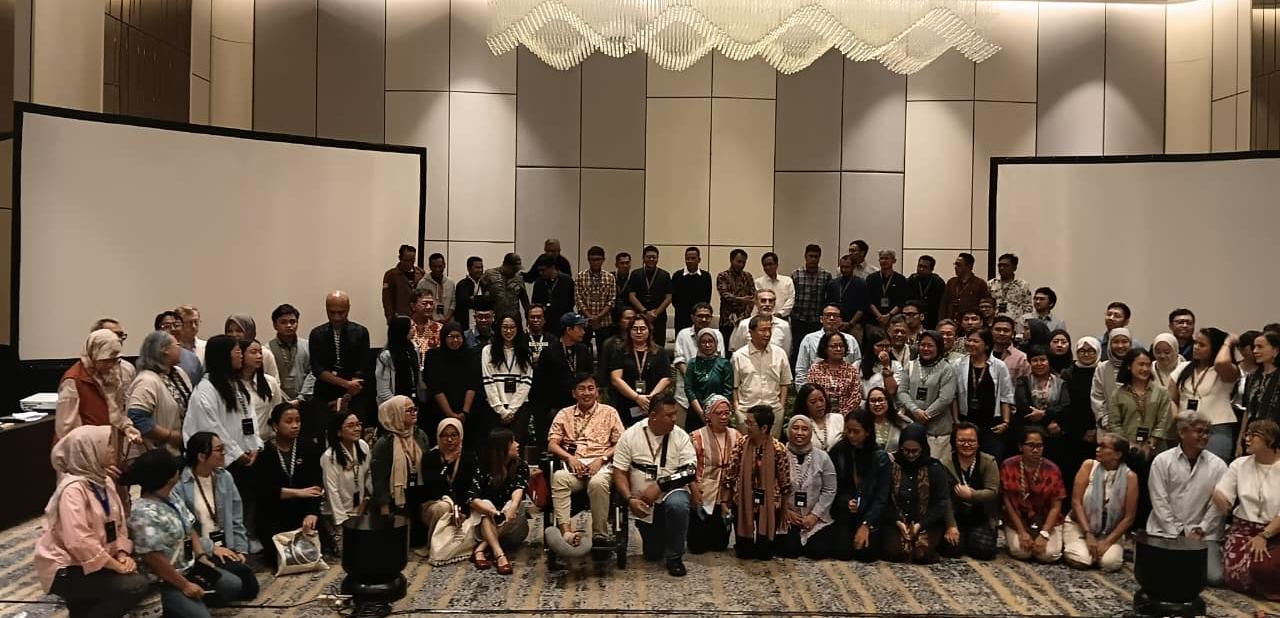
Over the past several weeks, I have been invited to participate in a series of dialogues on rights protection, civic space, democratic governance, institutionalizing justice, sustainability, and social transformation in Indonesia. These conversations began during the first and second weeks of June and have continued to expand, generating further invitations to discuss broader questions surrounding inclusion, governance, resilience, and what I have increasingly come to describe as an Inclusive Nexus perspective.
Across these conversations, participants brought perspectives from Indigenous Peoples’ rights, land and resource justice, disability inclusion, environmental governance, community empowerment, democratic participation, and sustainable development.
Although the issues appeared different on the surface, they repeatedly pointed toward a common question:
“How do we build a society where vulnerable and marginalized communities are not merely protected, but are genuinely able to influence the decisions that shape their lives?”
These discussions also prompted me to reflect on the future of civil society itself.
Interestingly, these reflections were reinforced by a series of back-to-back conversations I recently had with colleagues from the Department of Urban and Regional Planning at Universitas Diponegoro (UNDIP) and the Faculty of Engineering at Universitas Gadjah Mada (UGM).
Although the discussions emerged from different contexts, spatial planning, infrastructure, sustainability, governance, and community development, they repeatedly returned to a similar observation: contemporary challenges are becoming increasingly interconnected, while our institutions, policies, and interventions often remain fragmented.
Whether discussing disability inclusion, climate resilience, urban development, public participation, environmental sustainability, or social justice, the boundaries between sectors are becoming increasingly blurred. The more we explored these issues, the clearer it became that many of the challenges facing our communities can no longer be understood or addressed through isolated disciplinary, organizational, or sectoral approaches.
These exchanges further reinforced what I have increasingly come to view as the importance of an Inclusive Nexus perspective: the recognition that inclusion, governance, climate action, sustainability, accessibility, community resilience, and citizen participation are not separate agendas, but interconnected dimensions of broader systems transformation.
If our challenges exist as a nexus, then perhaps our responses must also evolve into nexuses of collaboration, learning, and collective action.
I do not approach these questions as a pessimist, nor as someone seeking catharsis from frustration with the current state of affairs. I remain an optimist.
Perhaps this optimism comes from years of working across disability inclusion, climate change, sustainability, governance, and multi-stakeholder collaboration. It also comes from viewing social change through the lens of systems thinking.
From a systems perspective, societies are constantly shaped by reinforcing and balancing dynamics. Progress and setbacks, inclusion and exclusion, participation and concentration of power, resilience and vulnerability often coexist within the same system.
What we observe at any given moment is not a static reality, but the result of countless interactions among people, institutions, incentives, values, resources, and historical conditions.
Because of this complexity, social transformation rarely follows a linear path.
Human systems are inherently unpredictable. They generate feedback loops, unintended consequences, tipping points, and emergent outcomes that are often difficult to anticipate in advance.
For me, this is precisely why civil society remains important.
The challenge is not simply to react to problems as they emerge, but to identify leverage points capable of shifting underlying dynamics. The objective is not merely to manage symptoms, but to understand the structures, relationships, and incentives that produce those symptoms in the first place.
Ultimately, meaningful social transformation requires approaches that are both systemic and systematic. It requires us to understand the interconnected nature of social challenges while simultaneously building practical pathways for change.
As the founder of DILANS Indonesia, and as a person with a disability who has spent many years working across disability inclusion, climate change, sustainability, governance, and community development, I have often found myself navigating different worlds. Yet over time, the boundaries between these worlds have become increasingly blurred.
The communities most vulnerable to exclusion are often the same communities most exposed to climate impacts, governance failures, economic insecurity, limited access to services, and unequal opportunities. Whether we are discussing disability rights, Indigenous Peoples’ rights, environmental justice, ageing populations, or community resilience, we are often speaking about different dimensions of the same challenge.
Over the years, this realization has also influenced my involvement in broader collaborative initiatives, including DILANS Indonesia, ASCODI, the Inclusive District Platform (IDP), and the emerging Nexus approach. These experiences have reinforced a simple observation:
The more complex a challenge becomes, the less likely it is that any single organization, discipline, sector, or movement can address it alone.
Climate justice requires governance reform. Governance reform requires citizen participation. Citizen participation requires inclusion. Inclusion requires accessible systems. Accessible systems require innovation, financing, research, and political commitment.
In reality, these issues do not exist in isolation. They exist as a nexus.
The challenge for civil society is therefore not only to strengthen individual organizations, but also to strengthen the connective tissue between organizations, communities, researchers, governments, private sector actors, and social movements. The future may depend on our ability to cultivate ecosystems that connect people and institutions, and nexuses that connect ideas, sectors, and shared challenges into collective action.
These reflections have increasingly shaped how I think about disability inclusion, climate justice, democratic governance, and community resilience. They have also led me to reflect on what role civil society should play in an increasingly uncertain and interconnected world.
These conversations also revealed a growing tension that I believe many civil society organizations are currently confronting.
Around the world, citizens are facing immediate economic pressures, political uncertainty, social polarization, technological disruption, and growing concerns about their future. Students, youth movements, workers, marginalized communities, and ordinary citizens are increasingly demanding not only representation, but tangible pathways toward social, economic, and political transformation.
In this context, civil society organizations occupy an increasingly precarious position. Many continue to advocate for important causes and deliver valuable programs, yet there appears to be a growing gap between what organizations are building and what citizens are seeking.
This does not mean civil society has become irrelevant. On the contrary, civil society remains an indispensable pillar of democratic governance and social transformation. However, it may need to evolve.
The challenge is no longer simply how to represent communities more effectively. It is how to cultivate agency, strengthen ecosystems, and help citizens organize around the issues that matter most to their lives.
Perhaps this is why the question of citizen power has become increasingly important to me. Ultimately, the future relevance of civil society may depend less on its ability to represent citizens and more on its ability to help citizens represent themselves.
The first reflection is that organizational capacity alone is not enough.
For decades, many organizations have focused on strengthening their institutions—improving governance, expanding programs, increasing funding, and building professional capacity. These remain important objectives. However, many of today’s challenges are systemic and interconnected. They cross sectors, administrative boundaries, and institutional mandates.
No single organization, regardless of its size or expertise, can solve them alone.
What matters increasingly is not only the strength of individual organizations, but the strength of the relationships between them. Social transformation requires networks, coalitions, partnerships, and shared learning. It requires governments, communities, researchers, activists, philanthropic institutions, and private sector actors to work together around shared purposes.
No single organization can drive systemic change alone.
The second reflection is that participation is not the same as power.
Many development initiatives celebrate participation. Communities are invited to meetings, consultations, workshops, public hearings, and stakeholder dialogues. These processes are important and should continue to be strengthened.
Yet participation alone does not necessarily change outcomes.
The more important question is often much simpler:
Who ultimately makes the decisions?
For persons with disabilities, Indigenous Peoples, older persons, women, and other marginalized groups, meaningful inclusion should not be measured solely by their presence in the room. It should also be measured by their ability to influence policies, budgets, institutional priorities, and governance systems.
Participation is important, but participation without influence can easily become symbolic.
Inclusion must therefore move beyond participation toward decision-making power.
The third reflection concerns the role of civil society itself.
In increasingly competitive environments, organizations face constant pressure to secure funding, maintain visibility, deliver projects, and sustain operations. These pressures are understandable. Every organization must survive in order to continue its work.
Yet there is also a risk that organizational survival gradually becomes more important than the mission itself. The purpose of civil society is not to perpetuate institutions. It is to advance public purpose.
Organizations should be vehicles for social transformation, not destinations in themselves. Their legitimacy ultimately comes from their ability to remain accountable to the communities they serve and the values they claim to uphold.
Mission must remain the anchor. Without it, organizations risk becoming trapped by short-term interests, donor priorities, political pressures, or institutional inertia.
The fourth reflection has perhaps become the most important lesson for me.
We often discuss how to build stronger organizations. Increasingly, I believe we should be asking how to build stronger ecosystems.
Every organization has limitations. Leaders change. Funding cycles end. Political environments shift. Priorities evolve. Institutions may grow, shrink, merge, or disappear.
What often survives is something larger.
Trust survives.
Relationships survive.
Shared values survive.
Collective memory survives.
Communities survive.
Movements survive.
This is why ecosystem thinking matters.
The future of social transformation may depend less on the growth of individual organizations and more on our ability to cultivate networks of collaboration, adaptive learning, distributed leadership, and mutual support.
Organizations may initiate change.
Ecosystems sustain change.
Movements amplify and scale change.
Organizations are important, but lasting social transformation depends on ecosystems that are capable of nurturing movements, renewing leadership, preserving collective memory, and carrying the mission beyond any single institution.
The fifth reflection concerns scale.
Many of the challenges we face today do not stop at local or national boundaries. Climate change, migration, inequality, democratic governance, technological transformation, and sustainable development are increasingly interconnected across regions and countries.
At the same time, meaningful change still begins within communities.
For this reason, I have become increasingly convinced that civil society must learn to think globally, act globally, and organize locally.
Global frameworks provide direction. Local action creates impact. The task of civil society is to connect the two. Local innovations should contribute to broader movements and global conversations. At the same time, global agendas must remain grounded in the realities of people’s everyday lives.
Neither can succeed without the other. Taken together, these reflections point toward a broader conclusion about the future of civil society.
Civil society organizations will continue to play a vital role in protecting rights, advancing inclusion, and strengthening democratic governance. They remain an indispensable pillar of a healthy society and a functioning democracy.
Yet perhaps their greatest contribution is not simply speaking on behalf of vulnerable communities. It is helping create the conditions in which those communities can increasingly shape their own futures.
Ultimately, social transformation cannot be outsourced.
No organization, institution, political party, donor, or movement can permanently substitute for an active and engaged citizenry.
Representation remains important, but it should never become the final destination.
The deeper objective is to cultivate awareness, critical thinking, confidence, leadership, and collective agency among citizens themselves.
Citizens should not remain perpetual beneficiaries, clients, or constituencies represented by others. They should increasingly become active actors capable of understanding, questioning, organizing, collaborating, and influencing the decisions that affect their lives.
In this sense, the future of civil society is not merely about building stronger organizations. It is about building stronger citizens, stronger communities, stronger ecosystems, and stronger nexuses of like-minded actors capable of sustaining justice, resilience, and democratic participation beyond any single institution.
The ultimate success of civil society is not that it represents citizens forever. Its success is that citizens increasingly possess the awareness, confidence, knowledge, networks, and opportunities necessary to represent themselves.
The question is not whether citizens are included. The question is whether they have the awareness, agency, power, and opportunity to shape the future for themselves. That, ultimately, is the work of building citizen power.
–##–
* Farhan Helmy is Founder of DILANS Indonesia and ASCODI Lab. He is also Principal of Thamrin School of Climate Change and Sustainability
Author’s Note
This essay emerged from a series of dialogues, collaborations, and reflections on disability inclusion, climate justice, sustainability, governance, community resilience, and citizen participation. It reflects personal observations developed through engagements with civil society organizations, universities, government institutions, communities, and development practitioners over recent years.
The views expressed are intended not as definitive answers, but as an invitation to dialogue on the evolving role of civil society in an increasingly interconnected and uncertain world.
++++






Leave A Comment